This Forum will close on Wednesday 27 March, 2024. Please refer to the announcement on the Discussions page for further detail.
Poorly box
 lovegardening77
Posts: 332
lovegardening77
Posts: 332
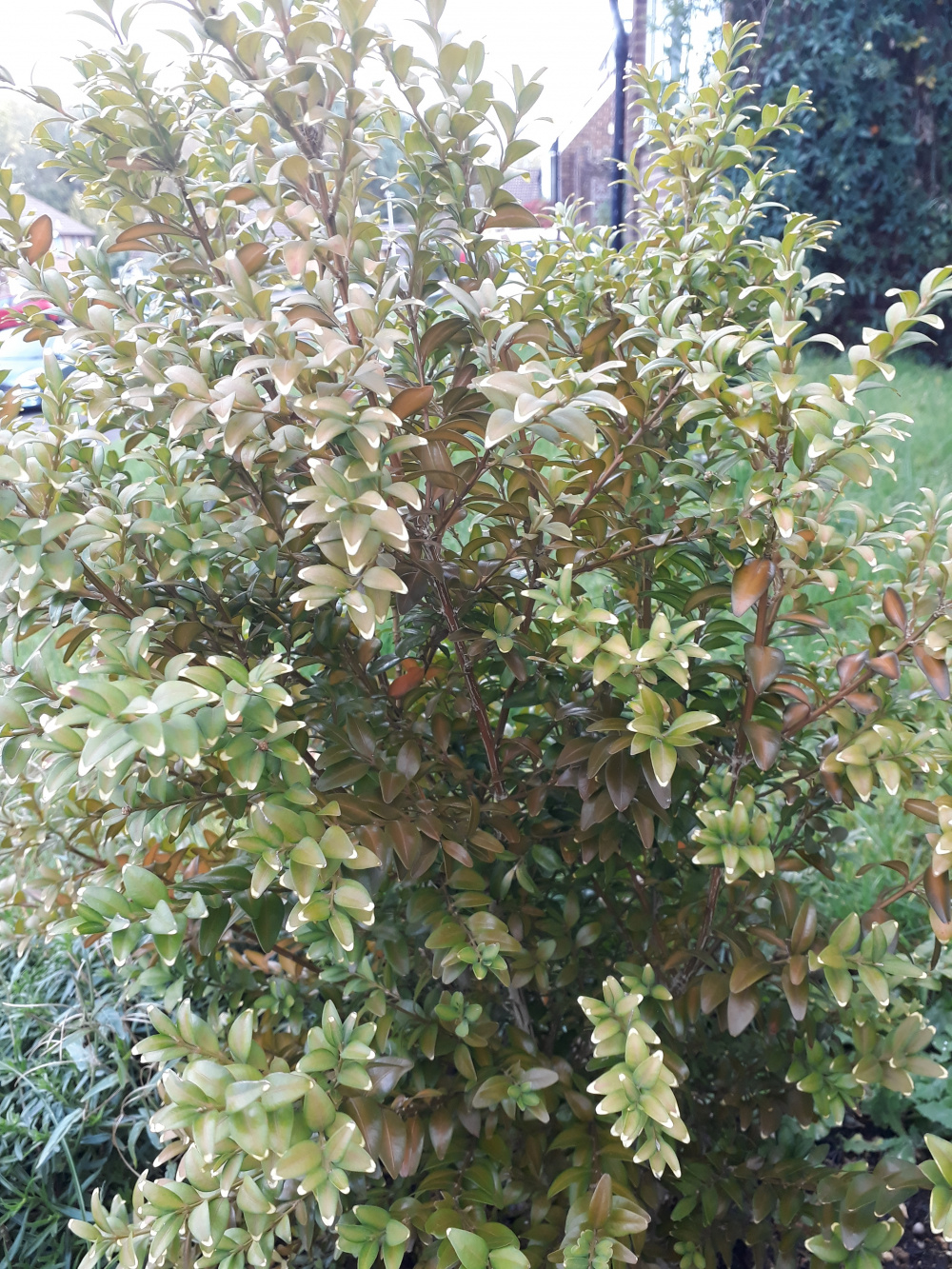 I've got 7 box plants. 5 look like this and the other 2 are being eaten by caterpillars. Should I get rid?
0
Posts
https://www.rhs.org.uk/advice/profile?pid=760
If they are in pots, make sure the water gets right into the root area. In the ground, make sure the ground is well prepared when planted in. Sometimes, humid over crowded conditions around the base can also result in stress.
Frankly it was quite an eye opening. I must admit I never even considered watering or feeding those poor little box plants. I kind of always thought they are so robust and pretty much just look after themselves.
They survived the scorching hot summer of 2018, this summer was easier. But it looks like they need some tlc every now and then (who doesn’t, right). They grow in full sun in extremely free draining poor soil.
Nothing I can do now this late in the year (or can I?), but will make sure they get some food and water the next growing season.
Stress due to lack of water is more common than stress due to overwatering. Airflow is important too, as @Borderline says. Pests and diseases on box love tightly packed plants.
I live in west central Scotland - not where that photo is...
Removing any diseased/damaged foliage will help, but you may not need to mulch
Watering may not be needed in your case either, especially at this time of year - I think if you have caterpillars, that may be the problem, but possibly stress from sun damage, and lack of water in hot spells too. It's difficult without seeing everything around them too.
I live in west central Scotland - not where that photo is...
Younger plants tend to settle quicker. Larger root-balls usually take a lot longer to settle into clay-base soils. If your original shrub was quite large when you planted it into the ground, you need to keep a close eye with watering in the first 2-3 years. The roots tend to take longer to adapt and grow into the new surrounding soil.